
How Is PETG Shrink Film Made? Where Roll Quality Is Decided
How PETG shrink film is made, and which production stage sets each line buyers check on arrival: gauge tolerance, TD/MD shrink, haze, tensile strength, roll labels.
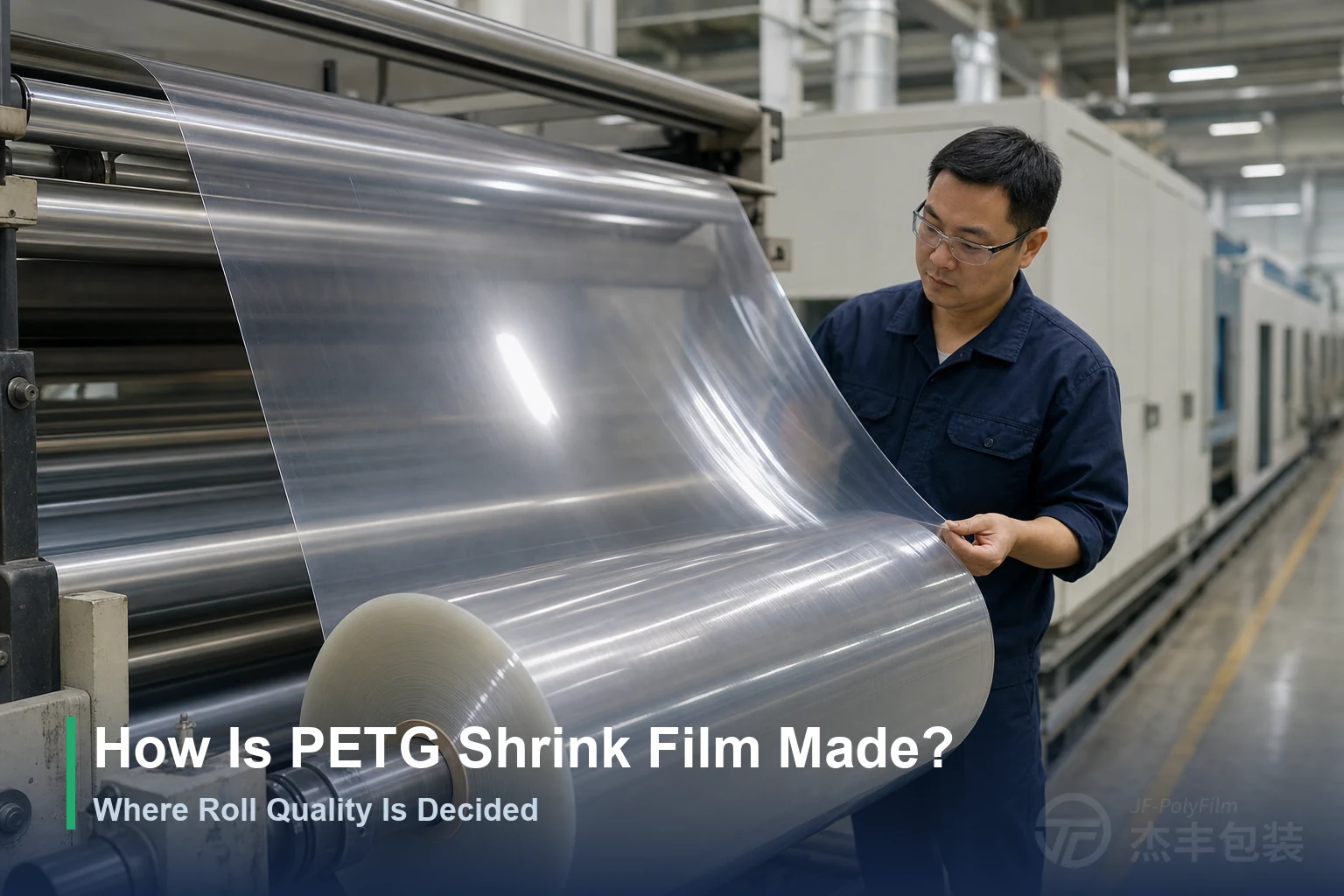
PETG shrink film is made by drying a shrink-grade copolyester, extruding and chill-casting it into a clear amorphous sheet, stretching the sheet across its width on a tenter, cooling it without high-temperature heat-setting, then trimming, slitting and batch testing.
Key takeaways
- Orientation goes mainly across the web: the film is stretched in the transverse direction with little or no machine-direction draw, and the spec sheet reflects that split; JFPolyFilm’s SH750 clear grade, for example, is rated at TD ≥75% and MD ≤3.0% (ASTM D1204, 95 °C, 10 s).
- Standard, non-shrink biaxially oriented polyester film is heat-set near its crystallization range, roughly 180–240 °C; PETG shrink film only gets a mild set near its stretching temperature before it is cooled, so its orientation is deliberately preserved.
- JFPolyFilm takes a sample of at least 5 m from every production batch and tests it before shipment; a Certificate of Analysis (COA) travels with the goods, and each roll label carries the batch number.
How PETG shrink film is made: the manufacturing process at a glance
The PETG shrink film manufacturing process follows a flat-film route in six stages: the resin is dried and melted, cast into a thick amorphous sheet on a chill roll, stretched sideways on a tenter, briefly set and cooled, then trimmed, slit into customer rolls and tested batch by batch.
| Stage | What happens | Which spec line it governs |
|---|---|---|
| 1. Resin and drying | Shrink-grade copolyester pellets, with small amounts of anti-block and slip additives, are dried in a desiccant dryer at a modest temperature | Coefficient of friction; poor drying shows up as bubbles and lower tensile strength |
| 2. Extrusion and casting | The melt is filtered, spread through a flat T-die and quenched on a chilled casting roll into a clear, unoriented sheet | Haze and light transmission, gels and die lines, thickness tolerance |
| 3. Transverse stretching | A tenter draws the warmed sheet across its width, with little or no machine-direction draw | High TD shrink and near-zero MD shrink (ASTM D1204, 95 °C); TD tensile strength well above MD |
| 4. Setting and cooling | The web is held briefly near its stretching temperature, then cooled below its glass transition | Shrink onset and final TD shrink, alongside resin formulation; heat sensitivity in storage |
| 5. Trimming, winding and slitting | Clip-held edges are cut off, the web is wound into mill rolls, rested, then slit and rewound | Roll width, roll length, splice count, batch number on the roll label |
| 6. Batch inspection | On-line thickness gauging runs throughout production; samples from each batch go through off-line lab tests | The shrink, thickness, haze and tensile results reported on the COA |
PETG shrink film raw material: a shrink-grade copolyester, dried before it melts
The raw material for PETG shrink film is a glycol-modified copolyester, supplied as pellets in a shrink-film grade, plus small amounts of handling additives.
Chemically, PETG sits in the polyester (PET) family. Part of the ethylene glycol in the standard polyester recipe is replaced by a bulkier modifying glycol, most often CHDM (1,4-cyclohexanedimethanol), which breaks up the regularity of the chain so the resin resists crystallizing and stays amorphous. For the material-level comparison, see how PETG differs from its parent polyester.
Frequently Asked Questions
What resin is PETG shrink film made from?
Why is PETG resin dried before extrusion?
Why isn't shrink film heat-set like ordinary polyester film?
Related Articles
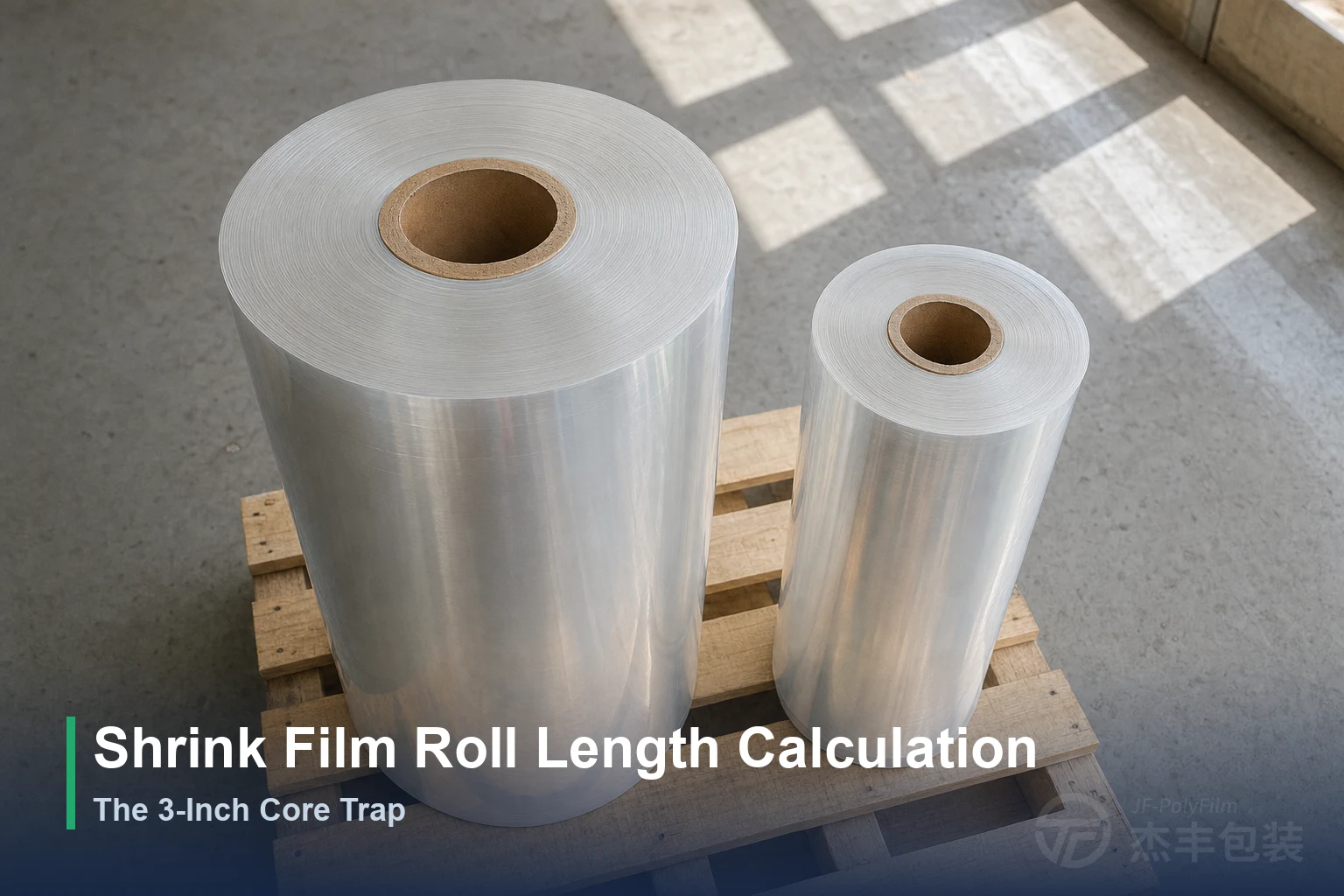
Shrink Film Roll Length Calculation: The 3-Inch Core Trap
Formulas linking roll diameter, length and weight, worked metric and imperial examples, a 30–60 μm diameter table, and why core size and trapped air shift the result.
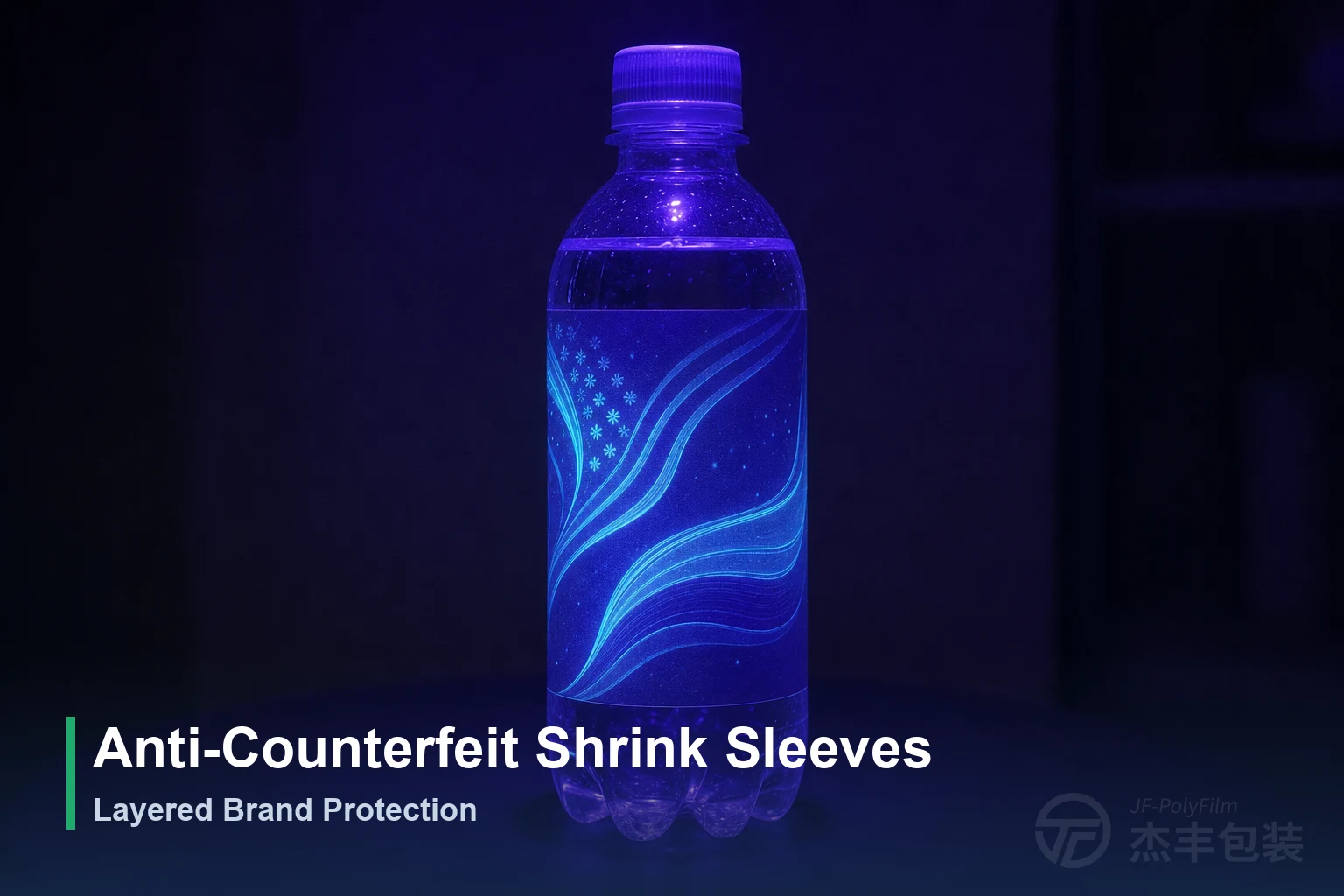
Anti-Counterfeit Shrink Sleeves: Layered Brand Protection
How a full-body shrink sleeve carries layered authentication — overt, covert, forensic, and serialized features — and where the film maker's job ends and the converter's begins.
Need Expert Advice on Shrink Film?
Our technical team can help you choose the right film for your application.
Contact Us