
PETG vs PLA Shrink Film: Recyclable vs Compostable
How PETG and PLA shrink sleeve films compare on shrink performance, heat tolerance, and end-of-life fate — and why the recovery stream usually decides the call.
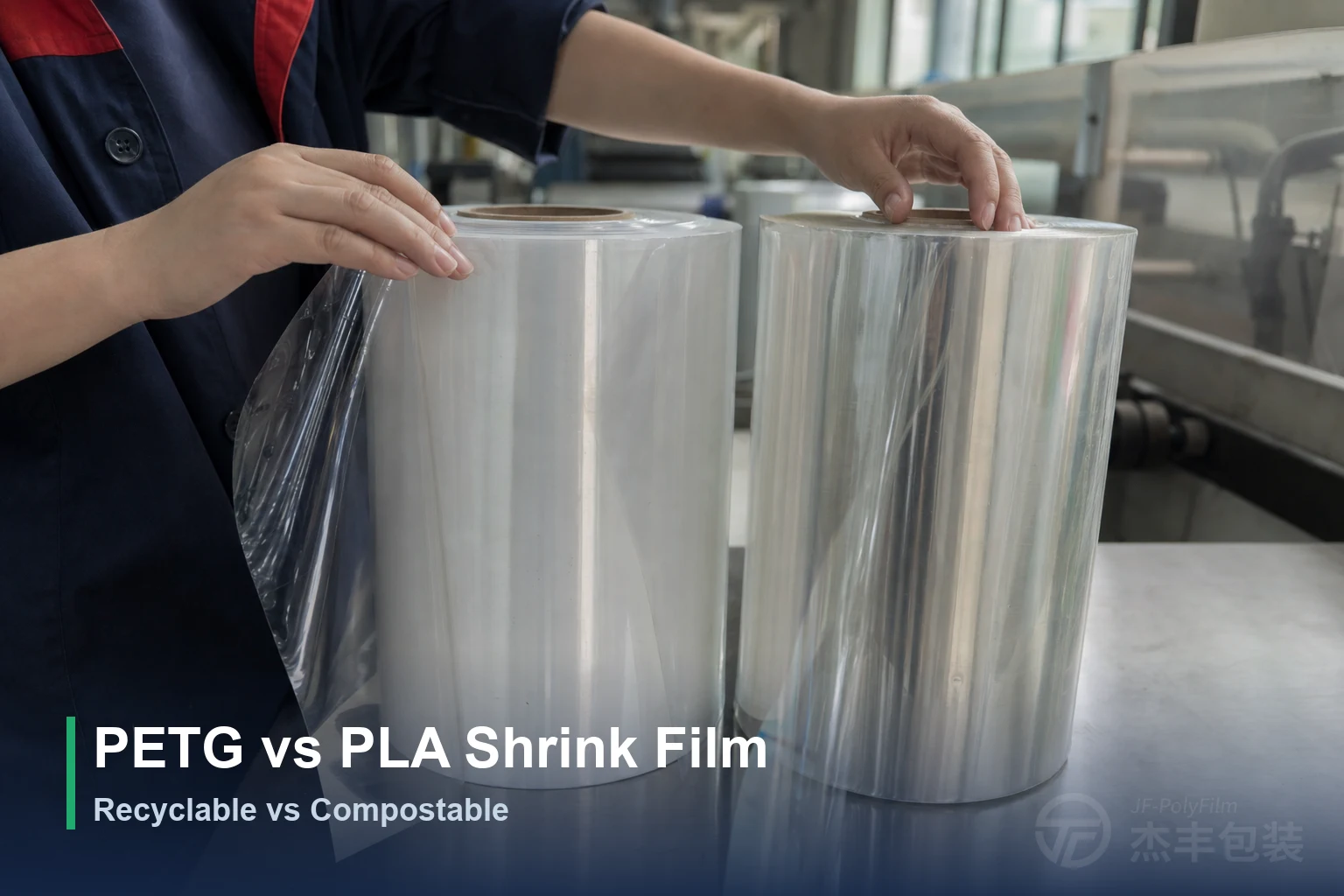
Choosing between PETG and PLA shrink sleeve film comes down to two questions: how each shrinks onto a container, and where it ends up after use. PETG is a glycol-modified polyester in the PET family; PLA is the plant-based alternative.
Key takeaways:
- PLA starts shrinking earlier — around 70°C versus roughly 80°C for PETG — but its usable window is narrow, because its glass transition sits low at about 55–65°C.
- PETG reaches the higher shrink ratios, up to roughly 78% transverse, which matters on deep-contour and waisted bottles; PLA tops out above 60%.
- At about 1.24 g/cm³ PLA sinks alongside PET bottles (near 1.38) in float-sink sorting, so it contaminates the PET recycling stream instead of being separated from it.
PLA is made from corn or plant starch rather than petroleum, so the raw material is renewable, and set against the oil-based incumbents — chlorine-based PVC chief among them — it is the one mainstream sleeve film that starts from a plant. (PVC carries its own recycling and chlorine trade-offs, weighed separately in PETG vs PVC shrink film.)
How each film shrinks onto the container
PLA begins shrinking around 70°C, roughly ten degrees below PETG, but it pays for that early start with a narrow, unforgiving window.
The reason sits in PLA’s glass-transition temperature, which is low — about 55–65°C. That low threshold is what lets the film start shrinking early, and it is also what makes it fragile, because anything above it softens the material.
The recycling problem hiding in PLA’s density
The reason PLA struggles as a recyclable sleeve is physical before it is chemical. At roughly 1.24 g/cm³ it is nearly as dense as a PET bottle at about 1.38, and PETG falls between them near 1.28–1.33 — every one of them heavier than water at 1.0, so none of them floats.
PETG sinks too, so the difference between it and PLA is not that one settles and one floats — both settle with the bottle. It is that PETG is a polyester, chemically part of the PET family, and can be engineered to belong in that stream, whereas PLA is a foreign polymer that density sorting has no way to remove.
Compostable, recyclable, and degradable are three different promises
- Recyclable means a material re-enters a stream and comes back as usable feedstock. PLA does not do this in any mainstream system; as the previous section showed, it enters the PET stream as a contaminant rather than a participant.
- Compostable means a material breaks down into water, CO₂, and biomass under defined conditions. PLA qualifies only under industrial composting. EN 13432, ASTM D6400, and China’s GB/T 19277.1 all set the bar in roughly the same place — temperatures near 58°C sustained across months, with disintegration and biodegradation thresholds a backyard pile or a cool garden bin never reaches.
Choosing between PETG and PLA for your sleeves
| Attribute | PETG | PLA |
|---|---|---|
| Base feedstock | Glycol-modified PET, oil-based | Corn / plant starch, renewable |
| Max transverse shrink | ≥75%, up to ~78% | >60% |
| Heat tolerance (Tg) | Higher, wide forgiving window | Low, ~55–65°C, narrow window |
| End-of-life route | Stays in the PET stream; CPET rides RIC 1 with the bottle | Industrial compost only; contaminates PET recycling |
| Best-fit use | Deep-contour and shaped bottles, recyclable programs | Certified-compostable, closed-loop settings |
Frequently Asked Questions
Is PLA shrink film actually recyclable or biodegradable?
Why can't PLA sleeves be sorted out of the PET recycling stream?
Does PLA shrink film hold up in a hot warehouse or container?
Related Articles
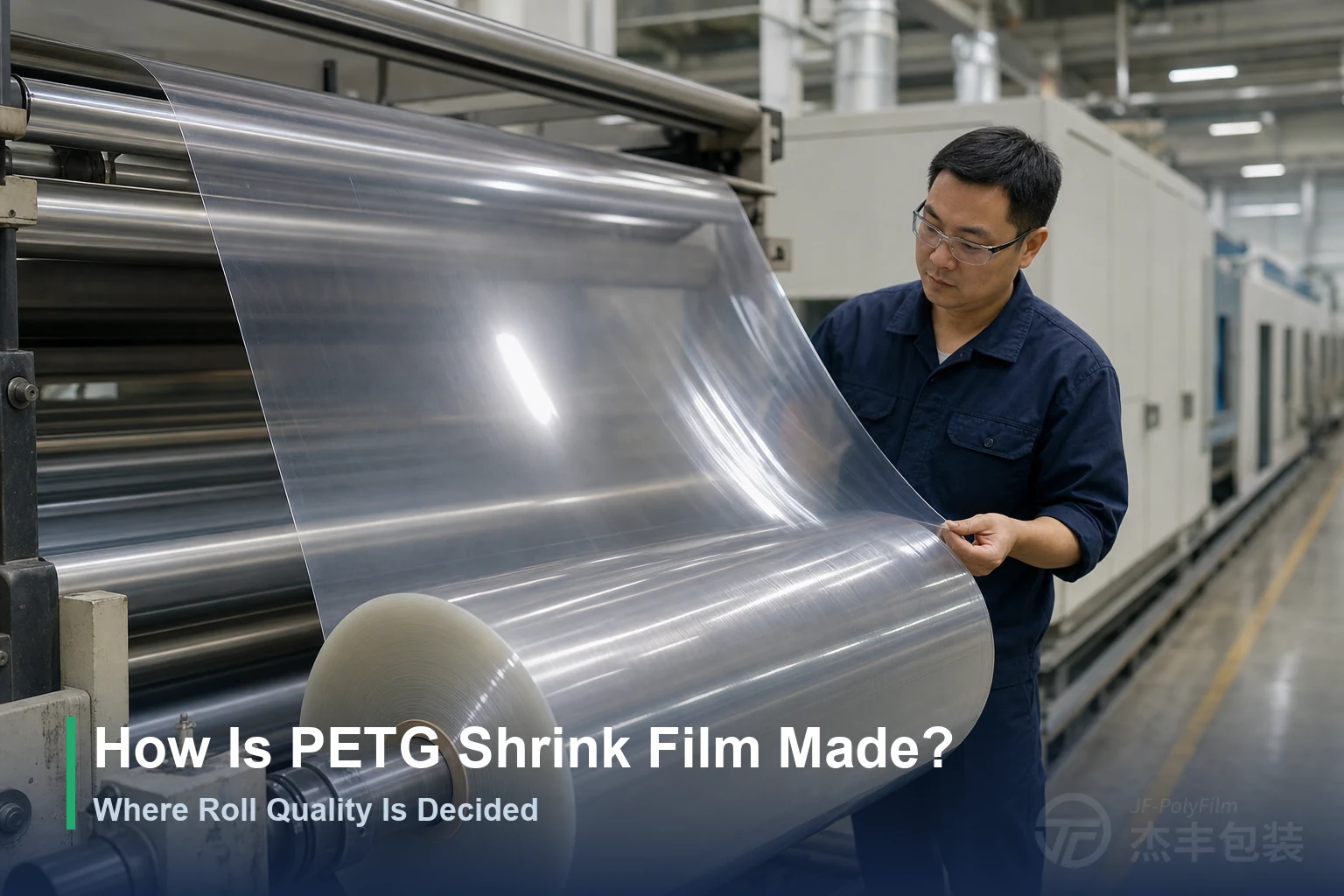
How Is PETG Shrink Film Made? Where Roll Quality Is Decided
How PETG shrink film is made, and which production stage sets each line buyers check on arrival: gauge tolerance, TD/MD shrink, haze, tensile strength, roll labels.
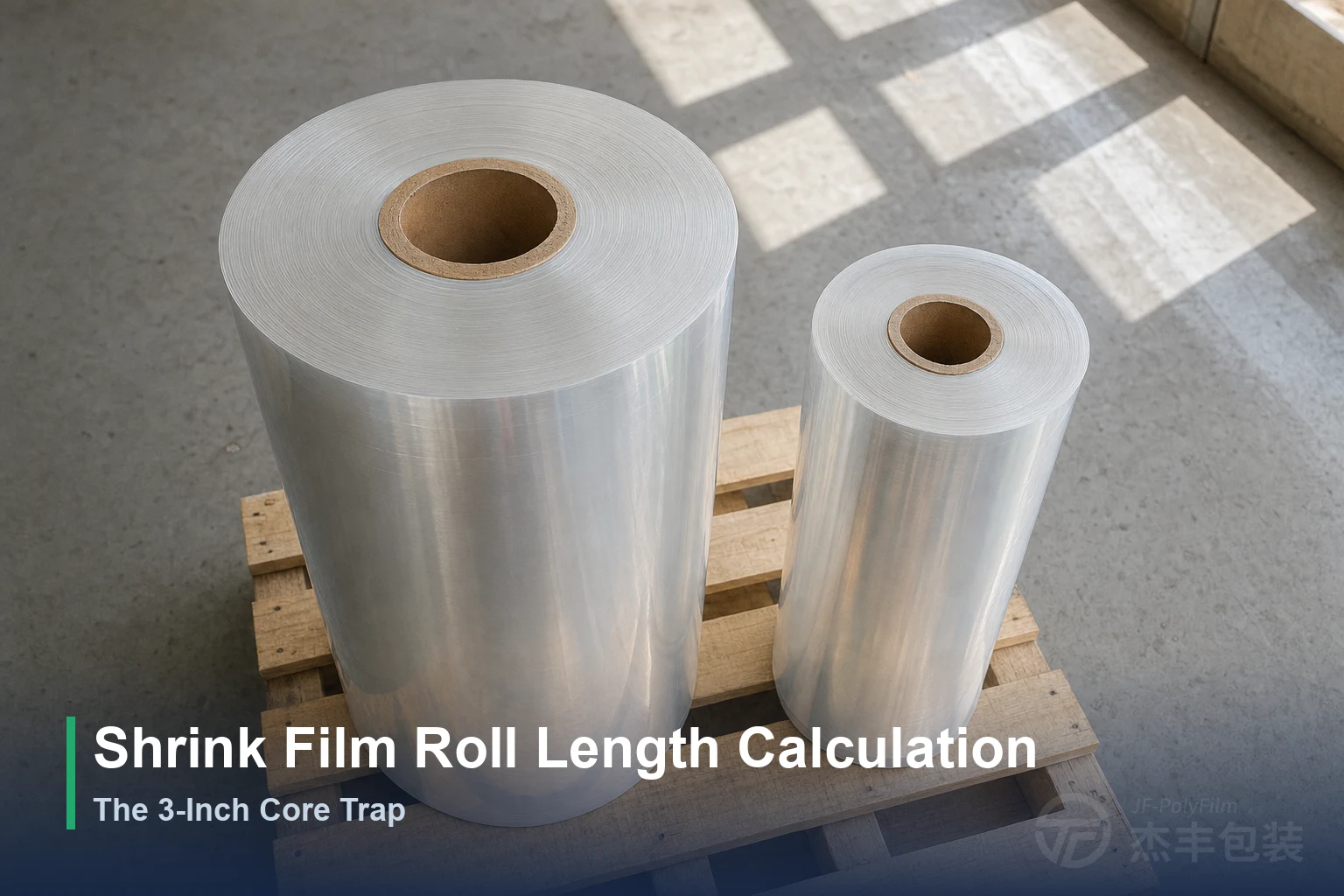
Shrink Film Roll Length Calculation: The 3-Inch Core Trap
Formulas linking roll diameter, length and weight, worked metric and imperial examples, a 30–60 μm diameter table, and why core size and trapped air shift the result.
Need Expert Advice on Shrink Film?
Our technical team can help you choose the right film for your application.
Contact Us