
Shrink Sleeves for Yogurt Cups and Dairy Bottles
A sourcing guide to opaque, light-blocking shrink sleeves for yogurt cups and dairy bottles: how to specify opacity and shrink, and keep the bottle recyclable.
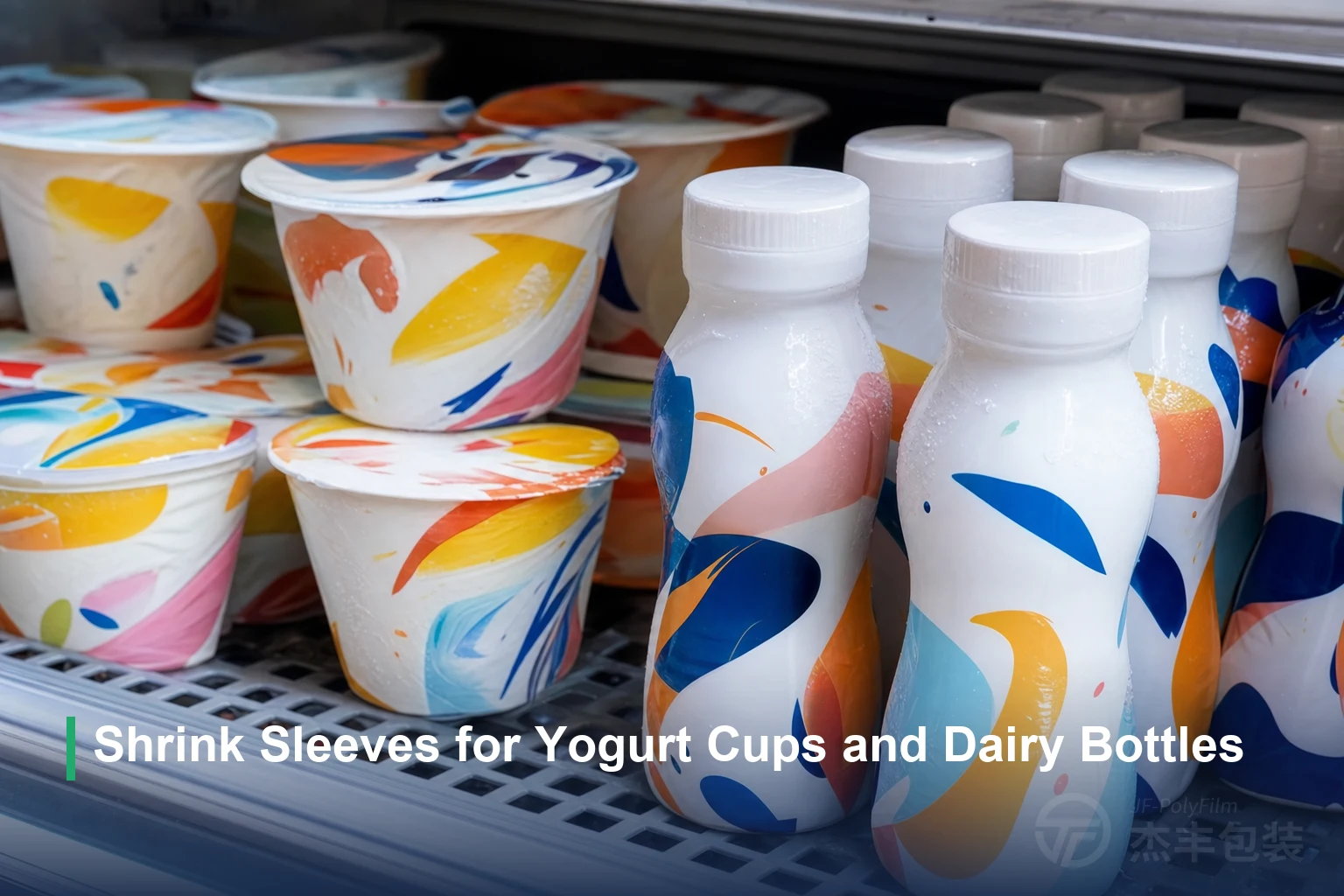
Shrink sleeves for yogurt cups and dairy bottles are full-body or neck heat-shrink labels that are printed flat, slipped over the moulded container, and tunnel-shrunk until they lock onto its exact contours. On light-sensitive dairy their decisive job is blocking visible light, which an opaque white film does and a clear one cannot.
Key Takeaways
- Riboflavin in dairy absorbs blue-green light near 445 nm, so flavor and color loss on the shelf is driven by light exposure, which an adequate barrier prevents.
- Opacity, not clarity, blocks that light. A light transmittance of 30% or less is the figure to write into acceptance testing; on the white PETG grade JFPolyFilm runs for dairy sleeves it pairs with a haze of 100% or more.
- Opaque white film is made in PETG, CPET, and rPET, so the base resin can be matched to the container’s recycling route while the opacity stays on the label and the bottle underneath stays recyclable.
How to specify a dairy sleeve
Specifying a dairy sleeve comes down to three linked choices: an opaque white film to block light, a transverse shrink high enough to grip the container’s shape, and a shrink tunnel matched to that shape. The table below routes the common formats to each, and the white, clear, CPET, and rPET grade comparison covers where each base fits.
| Container type | Conformance challenge | Transverse shrink needed | Film and opacity | Tunnel |
|---|---|---|---|---|
| Tapered yogurt or dessert cup | Wide rim, narrow base; large circumference change | High, around 75% or more | Opaque white, light-blocking | Steam |
| Drinkable yogurt bottle | Moderate taper, shoulder curve | High, around 75% | Opaque white, light-blocking | Steam |
| Straight-wall flavored-milk bottle | Minimal taper, full-body wrap | Moderate to high | Opaque white, light-blocking | Hot air |
| Deep-curved shaped bottle | Tight recesses, sharp contours | Highest available, low machine-direction | Opaque white, light-blocking | Steam |
Why light, not oxygen, decides dairy shelf performance
For most light-sensitive dairy the sleeve decision turns on one property: how completely the film blocks visible light.
When riboflavin absorbs visible light it reaches an excited state and generates reactive singlet oxygen, which attacks fats, proteins, and vitamins to produce off-flavors and faded color. That absorption sits in the blue-green region, peaking near 445 nm, with the most damaging band spanning roughly 400 to 500 nm — and modern retail sharpens the problem, because LED chiller lighting carries comparatively high energy right inside that window.
Building light-blocking into the film
The white PETG grade JFPolyFilm runs for dairy sleeves holds a light transmittance of 30% or less — the value a buyer can write into a purchase agreement and verify on a certificate of analysis — alongside a haze of 100% or more.
Keeping light-blocking and recyclable
Opacity and recyclability need not collide, because on a sleeved bottle the opacity lives on the label while the container underneath stays clear PET.
An opaque white CPET sleeve is the same-resin option: it shrinks with the bottle and stays in the PET stream as RIC 1 material, the grade to pick when the target is single-stream PET recovery — the CPET RIC 1 recycling explainer covers it in depth.
The wider bottle-recycling picture sits in the beverage bottle sleeve guide and the broader PET shrink sleeve recyclability guide.
Frequently Asked Questions
Do clear shrink sleeves protect dairy from light?
Can a light-blocking sleeve go onto an existing clear container?
What shrink ratio do tapered yogurt cups need?
Related Articles
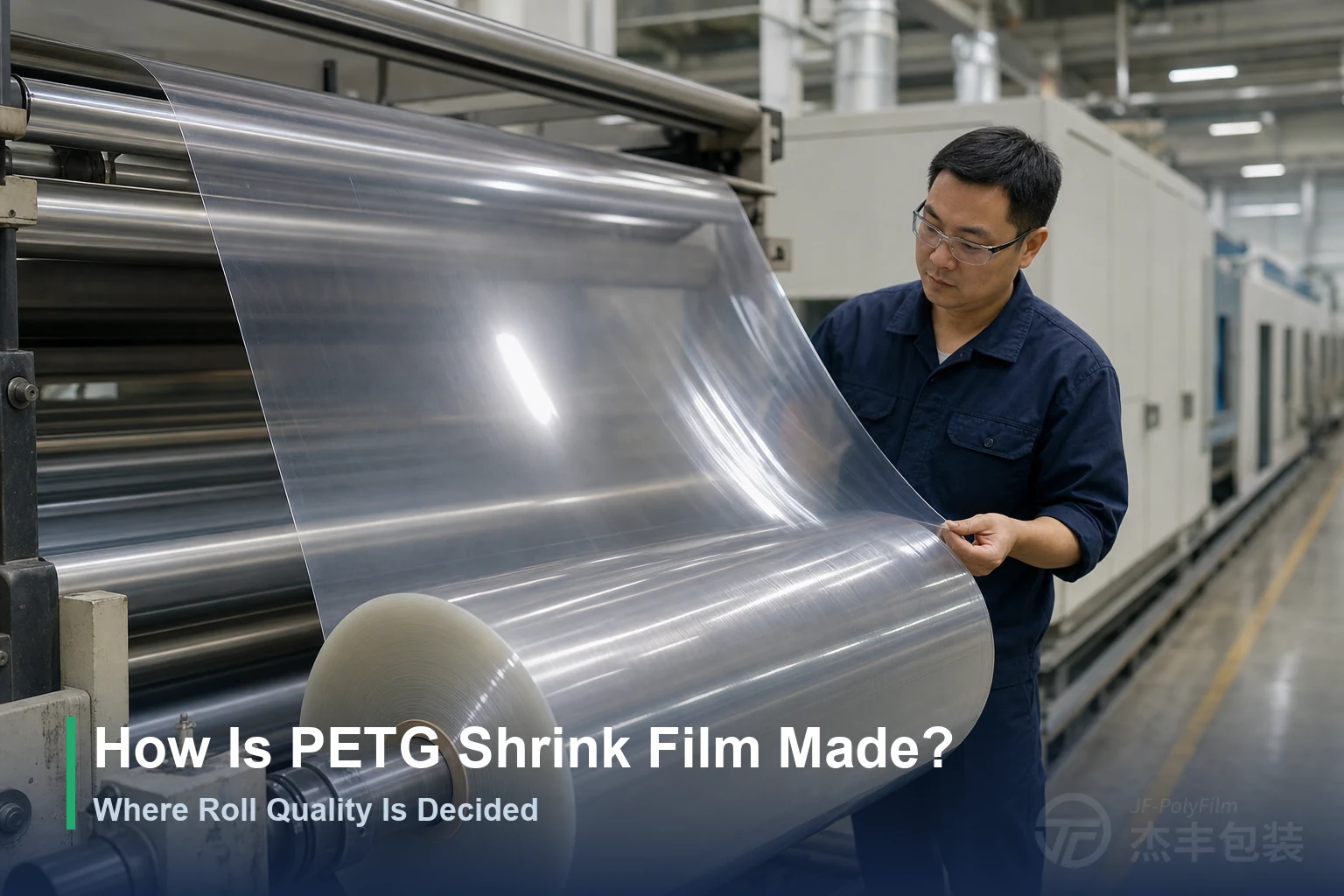
How Is PETG Shrink Film Made? Where Roll Quality Is Decided
How PETG shrink film is made, and which production stage sets each line buyers check on arrival: gauge tolerance, TD/MD shrink, haze, tensile strength, roll labels.
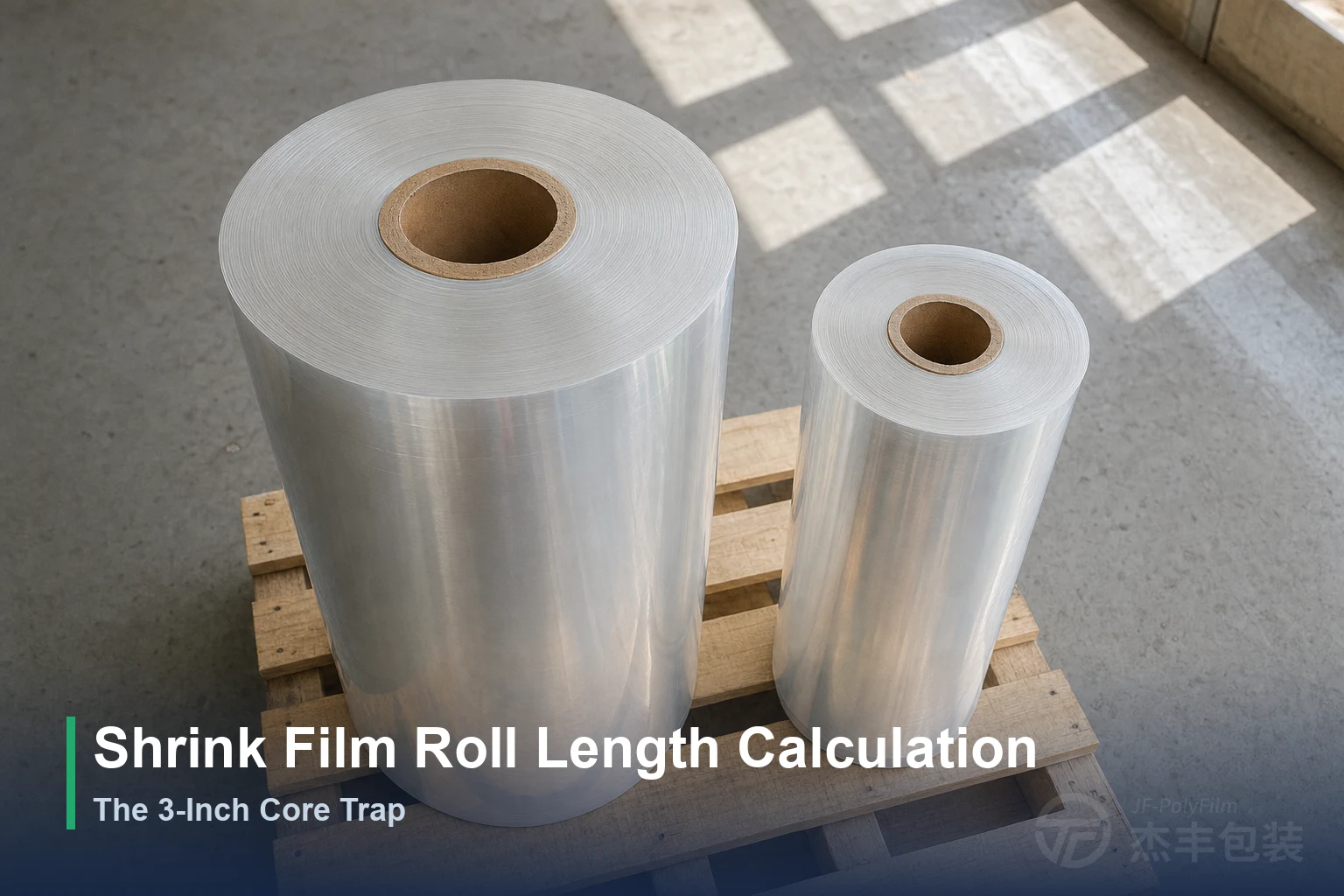
Shrink Film Roll Length Calculation: The 3-Inch Core Trap
Formulas linking roll diameter, length and weight, worked metric and imperial examples, a 30–60 μm diameter table, and why core size and trapped air shift the result.
Need Expert Advice on Shrink Film?
Our technical team can help you choose the right film for your application.
Contact Us