
Matte vs Glossy PETG Shrink Film: Which Finish to Choose
Matte or glossy is a finish decision made at the print stage, not a film grade — and it is not the same as clear versus white. How to match the finish to a brand.
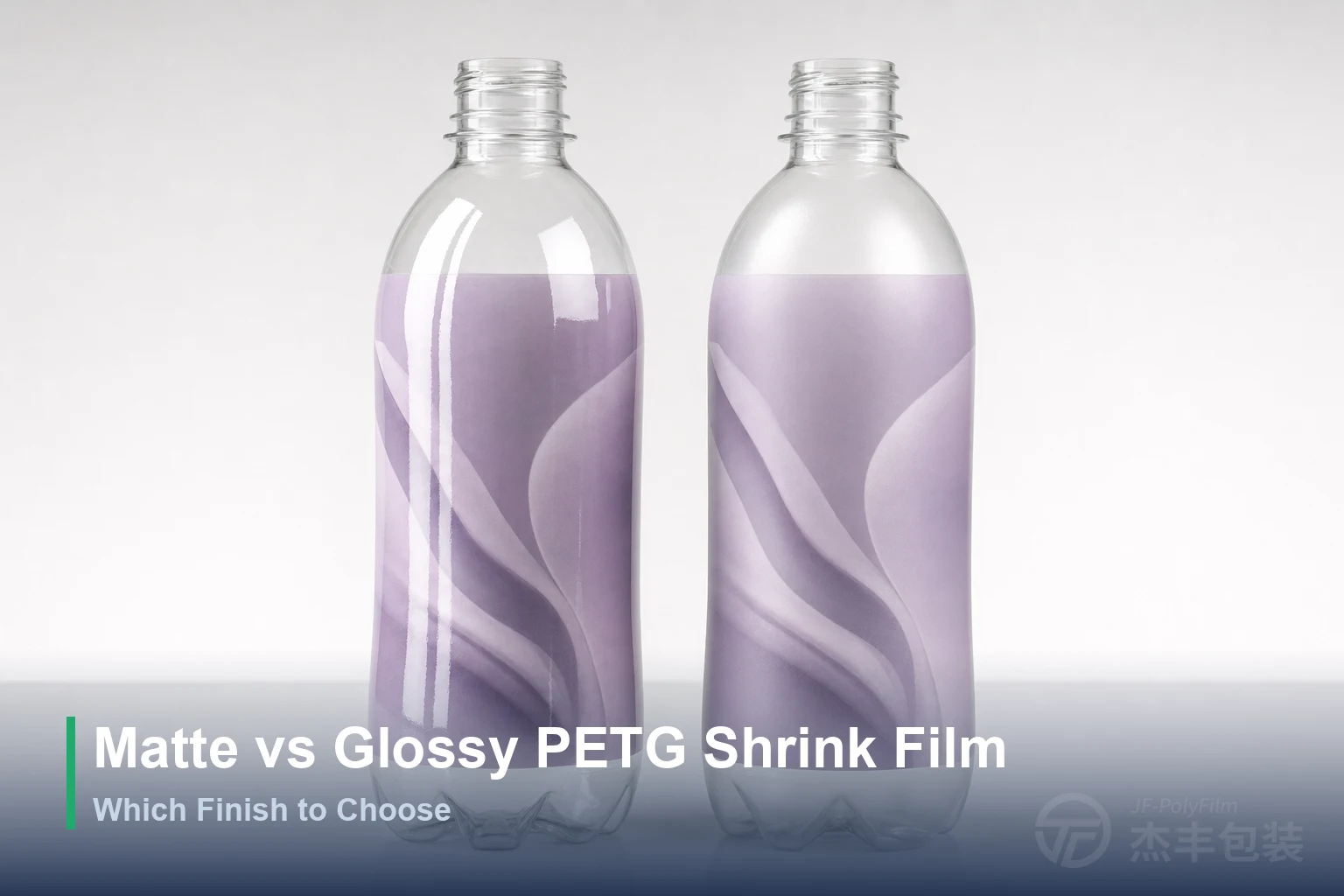
On a shrink sleeve, matte and glossy describe how the finished surface reflects light: a glossy finish is bright and mirror-like with glass-clear depth, while a matte finish scatters light for a low-glare, softer, more restrained look. Both can wrap the exact same bottle. Which one a sleeve ends up with is decided mostly at the print stage rather than by the film underneath it — and it is a different question from whether the film is clear or white.
Key takeaways
- Glossy is the clear PETG base film’s native look — bright, saturated, glass-clear. Matte is added, mostly as a matte overprint varnish applied at the print stage.
- Matte reads restrained and premium, cuts glare under store lighting, and hides fingerprints and scuffs; glossy reads vivid and eye-catching and shows them.
- Matte versus glossy is a finish decision — how the surface reflects light — and it is separate from clear versus white, which is an opacity and light-transmission grade decision.
- A film mill supplies the base film; the matte or gloss finish is specified at the print and converting step by the printer, not chosen from the film grade.
- A finish reads differently on a curved, shrunk sleeve than on a flat sample, so confirm it with a shrink trial on the real bottle under the lighting the pack will sit in.
Glossy and matte: two ways the same sleeve can look
Glossy and matte are the two surface finishes a shrink sleeve can carry, and they sit at opposite ends of one property — how much the surface reflects. A glossy finish is smooth and mirror-like: it bounces light back, deepens dark tones, and pushes colour toward its most saturated, so the pack looks bright and lively. Clear PETG comes off the line this way by default, which is why a transparent sleeve reads with glass-like depth over the container.
A matte finish does the reverse. Its surface is microscopically rough, so incoming light scatters instead of reflecting, and the sleeve reads soft, even, and low in sheen. Colours sit a shade quieter, the container beneath a clear matte film looks softened rather than crisp, and the surface hides fingerprints, handling marks, and light scuffs that a glossy face would show. Matte is the finish brands reach for when they want the design and typography to carry the pack rather than shelf sparkle.
Where a matte finish actually comes from
The matte or gloss finish on a shrink sleeve is set mostly at the print and converting stage, not by the film a mill supplies. The common route to matte is a matte overprint varnish — a coating laid over the printed artwork as a flood or spot pass — whose slightly rough microsurface scatters light and takes the shine off. Swap it for a gloss varnish and the same artwork reads high-shine instead. The finish, in other words, is a top-layer coating specified by the printer or converter, and it is chosen independently of the press method that lays the ink down.
That is the honest picture a buyer should hold onto: a film maker supplies the base film, and the finish is formed on top of it downstream. Clear PETG is glossy by nature — its smooth, transparent surface reflects. A white PETG grade reads a touch softer because its micro-voided surface is less mirror-like, but that is a by-product of how opacity is made, not a matte finish in the design sense. There is a second, minor route in which the substrate itself carries a matte surface, but for transparent full-body sleeves the coating route is the usual and more controllable one. JFPolyFilm’s clear PETG grade runs high transverse shrink of 75% or above, comes off the line glossy and glass-clear, and prints directly without corona pre-treatment; the matte-or-gloss decision is then made in printing, over that base.
Two things follow from that, and they are worth stating plainly. First, because JFPolyFilm supplies base film and does not print or coat it, there is no separate “matte grade” in the range, and there never will be — the finish is formed downstream by the printer, not built into the film we ship. What we control is the base: a clear grade that comes off the line glossy, or a white grade with a softer surface. Second, if a supplier markets a “matte shrink film” as its own product line, it is worth asking exactly where that matte is formed and who applies it, because on a transparent full-body sleeve the answer is almost always a varnish laid down in the print shop, not a property of the film itself.
Soft-touch sits at the far end of the same matte family. It is a coating too, specified at the print stage, that adds a velvety, tactile surface on top of the low-glare matte look and shares matte’s habit of hiding fingerprints. Brands treat it as a premium upgrade rather than a separate category, and like matte and gloss it is a finish briefed to the printer, not a film grade — worth naming here only so it is clear it belongs on the finish axis, not the material one.
Matte vs glossy: the comparison
Held side by side, matte and glossy trade the same properties in opposite directions, and the choice comes down to how a brand wants to be read on the shelf. Glossy maximises impact — reflection, saturation, and the glass-clear look of the container underneath. Matte maximises restraint — low glare, a softer palette, and a tactile, premium calm. Neither carries a performance penalty; they are two appearances of one sleeve.
A few practical differences decide most cases. Under bright retail lighting, a glossy face throws reflections that can bounce off small print, while a matte face stays readable because it does not glare. Glossy shows fingerprints and handling scuffs; matte hides them, which matters on packs shoppers pick up and put back. On a clear film, gloss keeps the see-through view crisp, while matte softens it. Gloss can be measured objectively — in gloss units read off a glossmeter, usually at a 60-degree angle, which sorts a surface into low-, semi-, and high-gloss bands — but that is a general measurement scale, not a shrink-film specification, and the decision is still made on how the finish reads on the shelf, not on a number.
Those differences are what pull whole categories toward one finish or the other. Premium spirits, fragrance, and prestige skincare lean matte because restraint reads as quality, because the anti-glare surface keeps engraved-looking type legible, and because these packs are handled in-store, where hidden fingerprints keep the pack looking clean. Bright beverages, energy drinks, and fast-moving mass-market goods lean glossy because their job is to be seen first across a crowded shelf, and gloss delivers the saturated colour and reflective pop that wins that half-second of attention. The split is a tendency, not a rule — a design-led beverage can run matte, and a premium line can choose gloss for a jewel-like effect — but knowing why the tendency exists makes it easier to decide when a brand sits on the fence.
| Dimension | Matte finish | Glossy finish |
|---|---|---|
| Shelf impression | Restrained, premium, understated | Vivid, eye-catching, saturated |
| Glare under store lighting | Low — scatters light, little reflection | High — mirror-like reflection |
| See-through clarity (on clear film) | Softened, less glass-like | Crisp, glass-like depth |
| Printed colour | Quieter, softer tones | Brighter, deeper, more saturated |
| Fingerprints and scuffs | Hidden — stays clean in handling | Shown — marks are visible |
| Typical fit | Premium spirits, fragrance, skincare, beauty | Bright beverages, mass-market FMCG |
| How it is set | Matte overprint varnish at the print stage | Clear PETG native gloss, or a gloss varnish |
The finish columns describe general grade and coating behaviour; the base-film figure is JFPolyFilm’s published clear-grade spec. Confirm the on-bottle finish with a shrink trial before committing volume.
Finish is not the same as clear versus white
Matte-versus-glossy and clear-versus-white are two separate axes, and treating them as one is the mistake that trips up most first specifications. Matte versus glossy is a finish decision — how much the surface reflects light — and it is formed at the print stage. Clear versus white is an opacity decision — how much light passes through the film, and whether the contents show or stay hidden — and it is a grade choice made in the film itself.
Because they are independent, all four combinations exist: clear-glossy, clear-matte, white-glossy, and white-matte. A clear film given a matte finish is still fully see-through; it simply does not reflect. A white film can be run high-gloss for a bright, saturated pack. The confusion to avoid is reading “matte” as “white,” or “glossy” as “clear” — a matte transparent sleeve still lets you see the bottle, and an opaque white sleeve can still shine. Whether the pack should reveal or conceal the contents, and whether the fill needs protection from light, belongs to the clear versus white PETG decision, not to the finish question. Decide the two on their own terms and then combine them.
Why the finish changes once the sleeve shrinks
A finish that looks right on a flat sample does not read the same after the sleeve draws down onto a curved bottle, so the shelf appearance is the one that counts. Shrink film is printed and finished flat, then heated so it pulls in tight around the container. On that curved, drawn-down surface the light behaves differently: a glossy face throws highlights and bright reflections across the curvature that a flat swatch never reveals, and those hotspots can catch a shopper’s eye — or wash out a detail — in ways the sample did not predict.
Matte works the same effect in reverse. Its anti-glare benefit is most visible precisely on the shrunk, curved pack under real store lighting, where a glossy version would be busy with reflections. The film also thins slightly as it draws down over deep shoulders and tapers, which can shift how the finish reads across the pack. The practical rule is to treat the flat sample as a starting point and confirm the finish on the actual container, at the target film thickness and shrink rate, under the lighting the product will sit in — because the shelf sees the shrunk sleeve, not the sample sheet.
Choosing between matte and glossy
The decision resolves into three steps taken in order.
- Set the direction by brand tone. If the pack should look understated, tactile, and premium — spirits, fragrance, prestige skincare — matte carries that. If it should look bright, saturated, and eye-catching on a busy shelf — vivid beverages, mass-market goods — glossy carries that. Start from how the brand wants to be read, not from the film.
- Know where the finish is made. Glossy is the clear PETG base film’s native look, or a gloss varnish; matte is a matte overprint varnish specified at the print and converting stage. It is a print-stage decision agreed with the printer or converter, separate from the film grade a mill supplies — so brief the finish there, not as a film-order line item.
- Trial on the real bottle under real lighting. The curved, shrunk surface changes how any finish reflects, so run a shrink trial on the actual container and view it under the store lighting the pack will meet before committing volume.
Keep the finish decision on its own axis from clear-versus-white, and the specification stays clean: pick the grade for what the pack must show or hide, and the finish for how it should read on the shelf. For the base film underneath either finish, JFPolyFilm supplies clear PETG shrink film that comes off the line glossy and glass-clear and prints directly, ready for whichever finish the artwork calls for.
Frequently Asked Questions
Is matte or glossy better for a shrink sleeve?
Where does the matte finish on a shrink sleeve come from?
Does JFPolyFilm sell a matte grade or matte shrink film?
Does a matte finish make a clear shrink sleeve opaque?
Can you print full-colour graphics with a matte finish?
Why does a glossy sleeve look different after it shrinks onto the bottle?
Related Articles
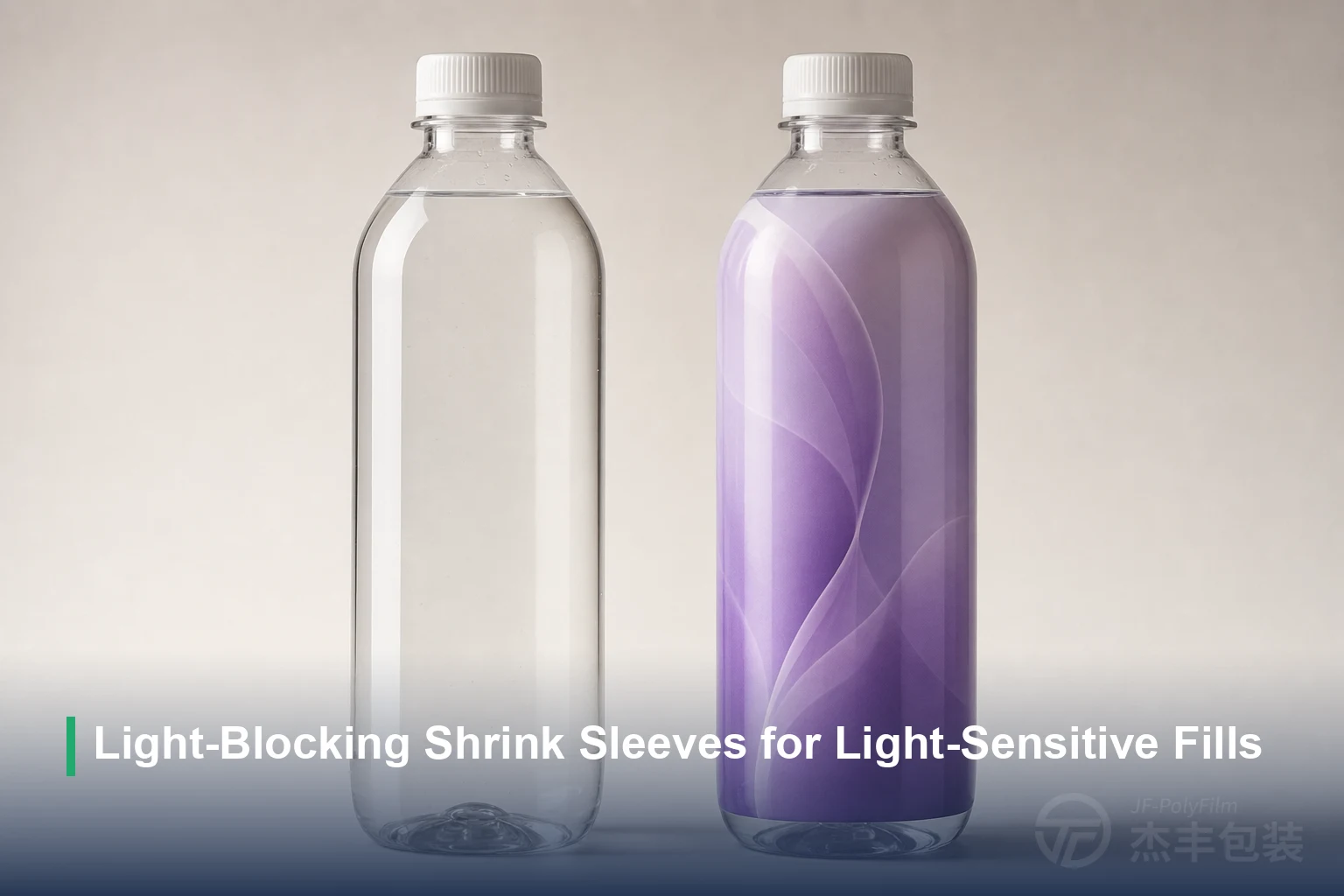
Light-Blocking Shrink Sleeves for Light-Sensitive Fills
Beer, dairy, supplements, and some medicines degrade under light. Which fills need protection, and how a full-body opaque PETG sleeve wraps the whole container to keep light off the contents.
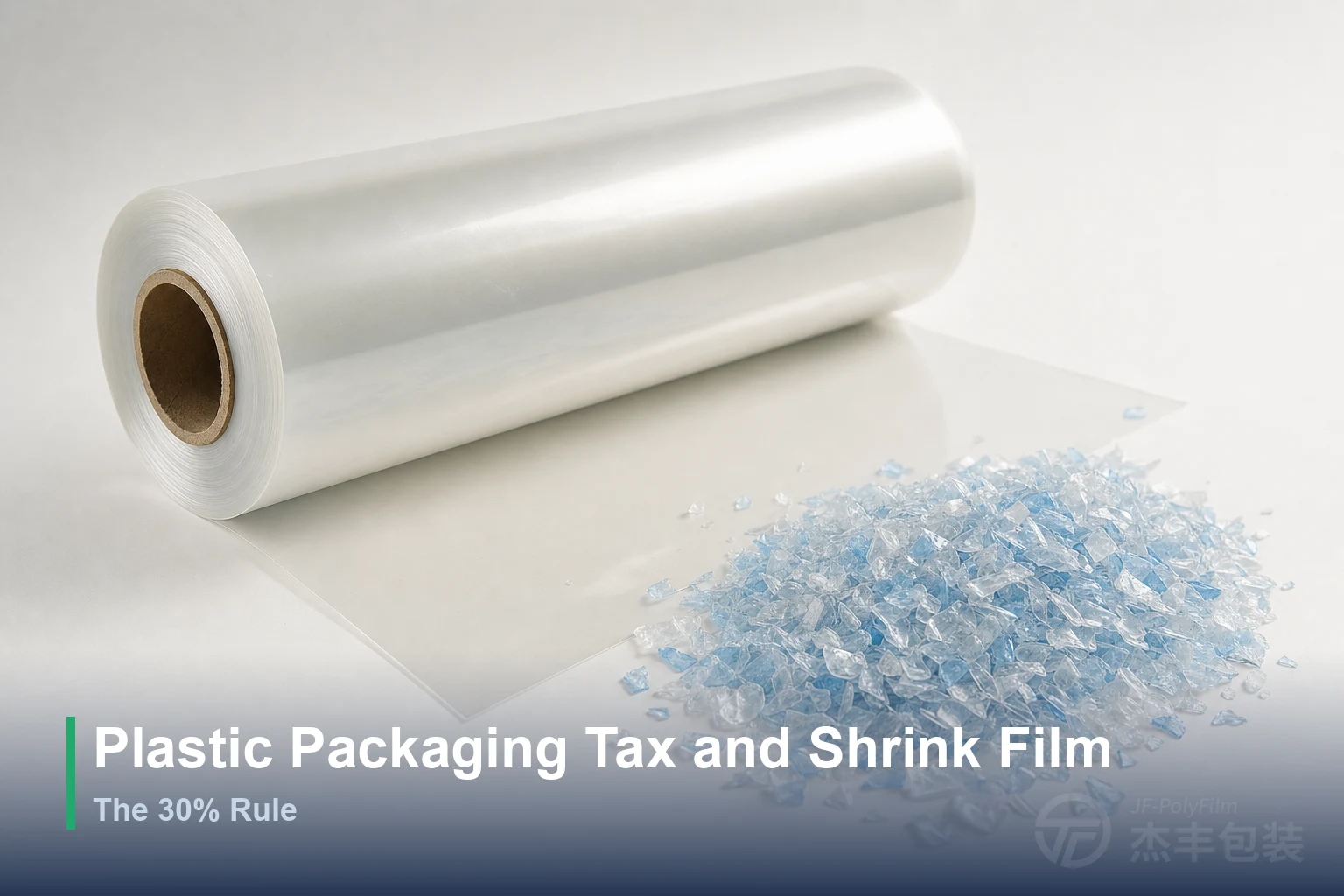
Plastic Packaging Tax and Shrink Film: The 30% Rule
How plastic packaging taxes in the UK, Spain, Italy and the EU treat shrink sleeves, why the 30% recycled-content threshold is the number worth remembering, and how RPET film helps a sleeve cross it.
Need Expert Advice on Shrink Film?
Our technical team can help you choose the right film for your application.
Contact Us