
How to Verify Shrink Film Certifications
A buyer's guide to authenticating GRS, REACH, and EU 10/2011 shrink film paperwork — the fields to read, the official registries to check, and red flags.
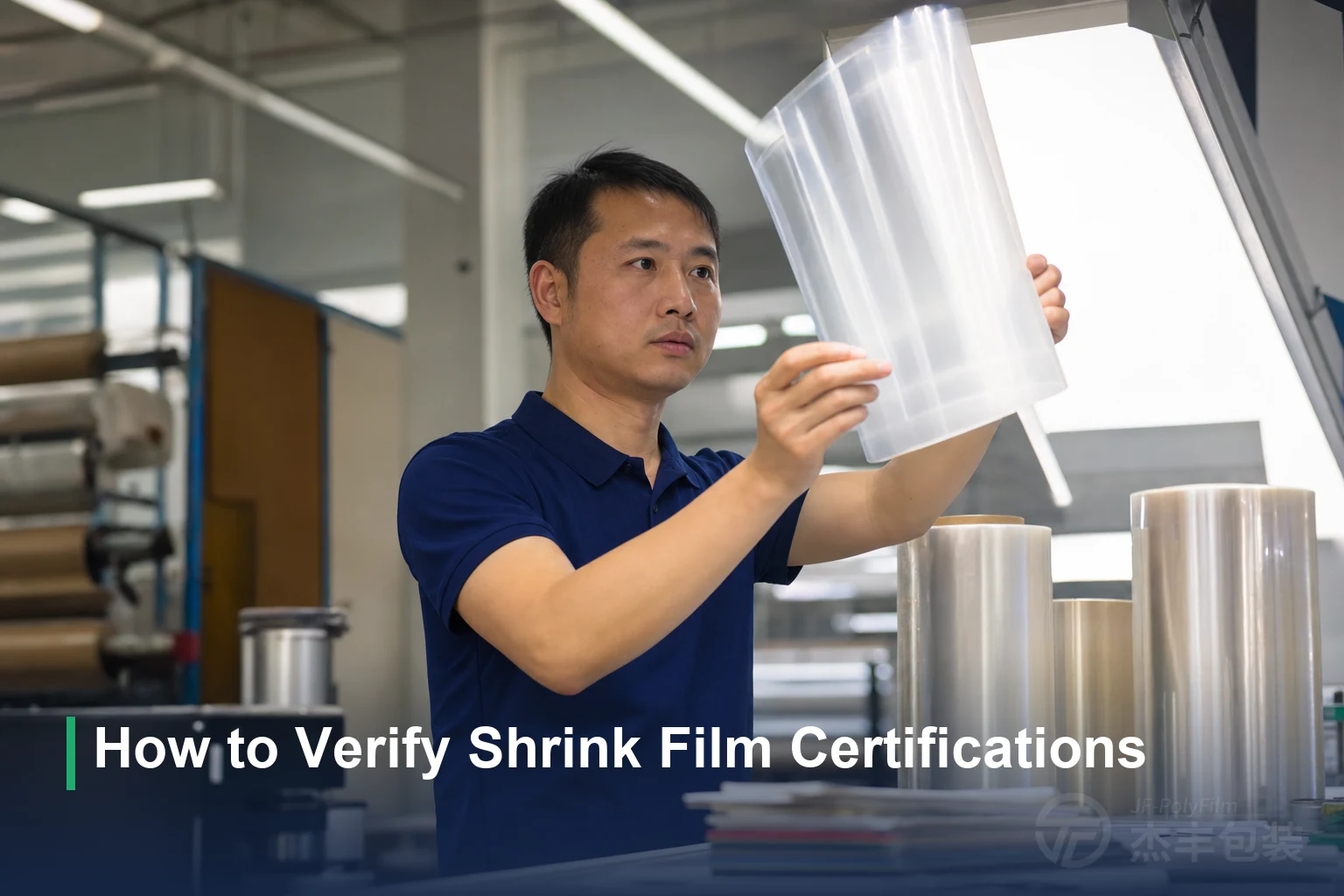
Verifying a shrink film certification means tracing each document back to its source — reading the identifying number, checking it against the issuing body’s official registry, and confirming the stated scope covers the exact batch on order. A number that cannot be traced is a claim, not proof.
Key takeaways:
- A scope certificate proves only that a plant is qualified to make GRS goods and stays valid for roughly one year, re-issued after each annual audit; a transaction certificate ties one specific shipment to that status, and only an accredited certification body — never the supplier — can issue it.
- REACH is an EU regulation, not a certification scheme; for a manufactured article there is no official REACH certificate, only an accredited-lab test report or a supplier self-declaration confirming no candidate-list substance above 0.1% by weight, and treating a bare declaration as proof is the most common trap.
- Four document families usually arrive together — recycled-content, substance-restriction, material-standard, and quality-management — and each proves a separate claim through a separate channel, so an EU 10/2011 declaration of conformity is verified by checking its Annex IV elements against supporting migration-test data rather than by trusting a logo.
- Strong proof carries a number, a date, and an issuer reachable independently; weak proof reads “REACH compliant” or “eco-friendly” with nothing traceable behind it.
- The fastest first move is to take a certificate’s number to its issuer’s registry and confirm the named holder is exactly the supplier on the invoice; a number that cannot be independently checked, or a holder that differs, fails the paperwork no matter how polished the PDF looks.
Which document proves which claim
Four different documents tend to arrive together in a shrink film certification package — a recycled-content certificate, a substance-restriction report, a material-standard declaration, and a quality-management certificate — and each proves a separate claim through a separate channel, so the first move is sorting every PDF into its correct family before verifying anything. Mixing them is the quiet failure that undoes the rest of the checks. An ISO 9001 certificate confirms an audited management system — verified through the accredited registrar’s own register — and buyers sometimes accept it as evidence of recycled content, which it never addresses; a REACH report speaks to restricted substances, not to how much recycled material a film contains.
Deciding which of these families a given project actually requires is a sourcing question that sits upstream of verification and is treated separately in how to choose a PETG shrink film supplier. The task here begins after the documents land: whatever a supplier has sent, each piece routes to its own method and its own registry. With each PDF sorted into its family, a buyer holding one certificate type can move straight to its check rather than working through the whole file.
Verifying a GRS recycled-content certificate
A recycled-content certificate is verified in a fixed order: read the number, confirm the scope certificate in the official registry, then obtain the transaction certificate for the specific shipment and authenticate it separately — because a scope certificate on its own never proves that the film in a given shipment is the certified material. The two documents answer different questions, and conflating them is the single largest gap in recycled-content checking.
A scope certificate (SC) records that a producer has been audited and is entitled to make GRS or RCS material — a standing qualification, valid for roughly one year and re-issued after each annual audit rather than extended. A transaction certificate (TC) is raised against one order and states that a named quantity of goods is genuinely certified material. A supplier cannot issue its own transaction certificate; only an accredited certification body can, so a “TC” produced on the supplier’s own letterhead is itself a warning. A genuine transaction certificate names the certified seller and its certificate number, the buyer, a unique TC number, and a product breakdown that includes the recycled-content percentage and shipment details.
The official route runs through the registry published by the standard’s owner, Textile Exchange:
- The scope certificate is looked up in the public “Find a Certified Company” list. A pass means the holder’s name matches the invoice supplier word for word and the status reads active with the certified scope covering the film; no matching company, or an expired status, is a reason to stop and ask before proceeding.
- The transaction certificate for the actual order is requested separately, since the scope certificate alone leaves the goods unproven.
- A transaction certificate issued from October 2022 onward is authenticated through the “Authenticate a Transaction” service; one issued earlier is confirmed with the certification body that signed it. A record that resolves is a pass; a number the service will not return is treated as unverified until the certification body confirms it.
- Every field — holder name, product description, recycled percentage — is matched against the film on the invoice, and any single field that disagrees outranks an otherwise clean-looking document.
The percentage itself carries meaning only against the standard behind it. RCS applies from a low recycled-input floor and covers presence and chain of custody alone, while GRS reaches past recycled content into supply-chain, social, and chemical-management requirements — the background set out in RPET packaging explained. A related distinction, between a recyclability claim and a recycled-content claim, trips up buyers often enough to read separately in CPET and RIC 1 recycling explained.
Reading a REACH claim
A REACH claim is read with a different expectation, because REACH is an EU chemical regulation rather than a certification scheme: for a manufactured article there is no official REACH certificate, only a test report from an accredited laboratory or a declaration the supplier has written itself. Verification therefore checks the laboratory, the report’s reference and date, and how specific the wording is — not whether a certificate exists, because strictly it does not.
The substance that matters most is a Substance of Very High Concern (SVHC), which triggers a downstream communication duty once its concentration exceeds 0.1% by weight in an article. That threshold is the line between weak and strong wording:
- Weak: the document reads only “REACH compliant” and stops there, with nothing traceable behind it.
- Strong: it names its position against the three obligations a compliance statement should cover — registration, SVHC candidate-list status, and restriction — confirms that no candidate-list substance is present above 0.1% by weight (or lists which are and at what level), and points to an accredited laboratory report by number and date.
The report is what turns strong wording into proof. An accredited laboratory’s report usually prints an independent verification entry — a web address or a QR code, most often in the header or footer — where entering the report’s reference number returns the original result. Confirming a report that way, rather than taking it on the supplier’s word, is the actual check; a report that offers no independent way to confirm it is itself weak evidence, however professional the layout, and an issue date should be recent enough to reflect the current candidate list.
RoHS sits in the same substance-restriction family and is verified the same way — accredited report, traceable number, current date — and turns relevant for a sleeve mainly when it wraps an electronic product sold into regulated markets.
Checking an EU 10/2011 declaration as a material standard
An EU 10/2011 declaration of conformity is checked as a material-level record: it describes the plastic’s composition and migration limits, and verification runs each required element against supporting migration-test data rather than accepting the declaration on its face. It documents the material, not the end use of a sleeve applied to the outside of a container. A shrink sleeve is an outer wrap — the form is described in what is a shrink sleeve label — so the declaration is read here strictly as a statement about the plastic, not as any end-use safety approval.
The declaration is a self-issued document, which means its credibility rests entirely on the evidence held behind it. Annex IV of the regulation sets out the core elements a complete one contains: the identity and address of the party issuing it and of the material manufacturer, a description of the material, the date, a statement of conformity with the relevant regulation, information on the substances used including any subject to restriction, and the specific migration limits that apply. Each element is checked for presence, and the whole is only as sound as the migration-test results that support it. A declaration must be re-issued when composition or process changes materially, so a stale date against a changed product is a reason to ask for the current version. Missing elements or absent test backing make a declaration incomplete; the practical response is to ask the supplier for the missing evidence rather than to assume anything was falsified.
Weak proof versus strong proof
Every family reduces to the same underlying question — can the document be traced back to an independent issuer, and does it name a specific field rather than a slogan. The table below places the weak and strong version of each certification side by side, with the field that separates them and the channel that confirms it:
| Certification family | Weak proof looks like | Strong proof looks like | Field to read | Official verification channel |
|---|---|---|---|---|
| Recycled content (GRS / RCS) | A scope certificate only, or a logo with no number | Scope certificate plus a per-shipment transaction certificate, both traceable | Transaction certificate number and recycled-content percentage | Textile Exchange registry; issuing certification body for older TCs |
| Substance restriction (REACH / RoHS) | “REACH compliant” with nothing attached | Accredited-lab report naming SVHC status against the 0.1% threshold | Laboratory accreditation, report number and date | The testing laboratory’s own verification channel |
| Plastics material standard (EU 10/2011) | A bare declaration with no supporting data | Declaration carrying every Annex IV element plus migration-test results | Annex IV elements and the specific migration limits | Supplier’s supporting test file, checked element by element |
| Quality management (ISO 9001) | A certificate image with an unreadable or lapsed scope | Current certificate whose scope names the actual production activity | Certificate number, validity dates, accredited registrar | The registrar or accreditation body register |
Down the “field to read” column a pattern appears: strong proof always points to something a third party issued and can re-confirm, while weak proof asks for trust in the document itself. That is the test for any certificate that does not fit neatly into a family — either it carries an independently verifiable field, or the paper stays a claim.
Red flags across every certification
The warning signs are consistent across all four families, and each one is about the document failing to check out — not about any judgement of a supplier or a region. A fake certificate rarely survives a registry lookup, so certification fraud is a risk buyers manage on paper, and the method is to test the paperwork, never to accuse a trading partner. The recurring signals:
- A general factory certificate offered in place of a shipment-specific transaction certificate, with the TC declined when requested.
- “We are certified” asserted without a number that can be looked up independently.
- A holder name, product description, or scope that does not match the film actually ordered — a sister-company certificate presented as the supplier’s own is the classic version.
- A validity date already passed, or a declaration whose date predates a material change in the product.
- Reluctance, when a buyer offers to contact the certification body or laboratory directly, to allow that contact.
- Only vague language — “eco-friendly,” “sustainable,” “green” — with no supporting document underneath it.
- A test report from a laboratory whose accreditation cannot be confirmed, however professional the layout.
- Signs of editing in the PDF — mismatched fonts, an alignment or a date that does not agree with the certificate number — which is why the number is checked in the registry rather than the file: the registry entry cannot be retouched, the PDF can.
None of these is a verdict about who sent the file. Each is a fact about the file itself, and each resolves the same way: the number is traced to its issuer, or the claim waits until it can be.
Walking one certificate package through the checklist
The whole method comes together on a single incoming package, where the documents are cleared in a fixed order before the order is trusted: the recycled-content pair first, then any substance-restriction report, then any material-standard declaration. Each one either resolves to an independent source or stops the process for a question:
- The scope certificate goes into the Textile Exchange registry, matched on holder name and status; the transaction certificate follows, authenticated for the shipment and read field by field against the invoice — quantity, recycled percentage, both parties.
- A REACH report, where the destination market calls for one, is confirmed through its issuing laboratory by reference number before its wording is accepted.
- Any EU 10/2011 declaration is run against Annex IV and the migration-test data behind it.
No field is waved through on presentation alone. As a concrete reference for the fields this checklist expects to find, the JFPolyFilm RPET shrink film is GRS-certified, with a scope certificate verifiable in the registry and a transaction certificate available for each shipment — an example of what passing paperwork looks like, not a substitute for running the checks. Whichever supplier a certificate comes from, the same registry lookups, the same traceable numbers, and the same weak-versus-strong test decide whether the paperwork is proof or merely presentation. Only the paperwork that survives those lookups belongs under a signed order.
Frequently Asked Questions
What is the difference between a scope certificate and a transaction certificate?
Is there an official REACH certificate for packaging film?
How can a certificate number be checked without contacting the supplier?
Which Annex IV elements should an EU 10/2011 declaration contain?
What are the clearest signs a certification cannot be trusted?
Related Articles
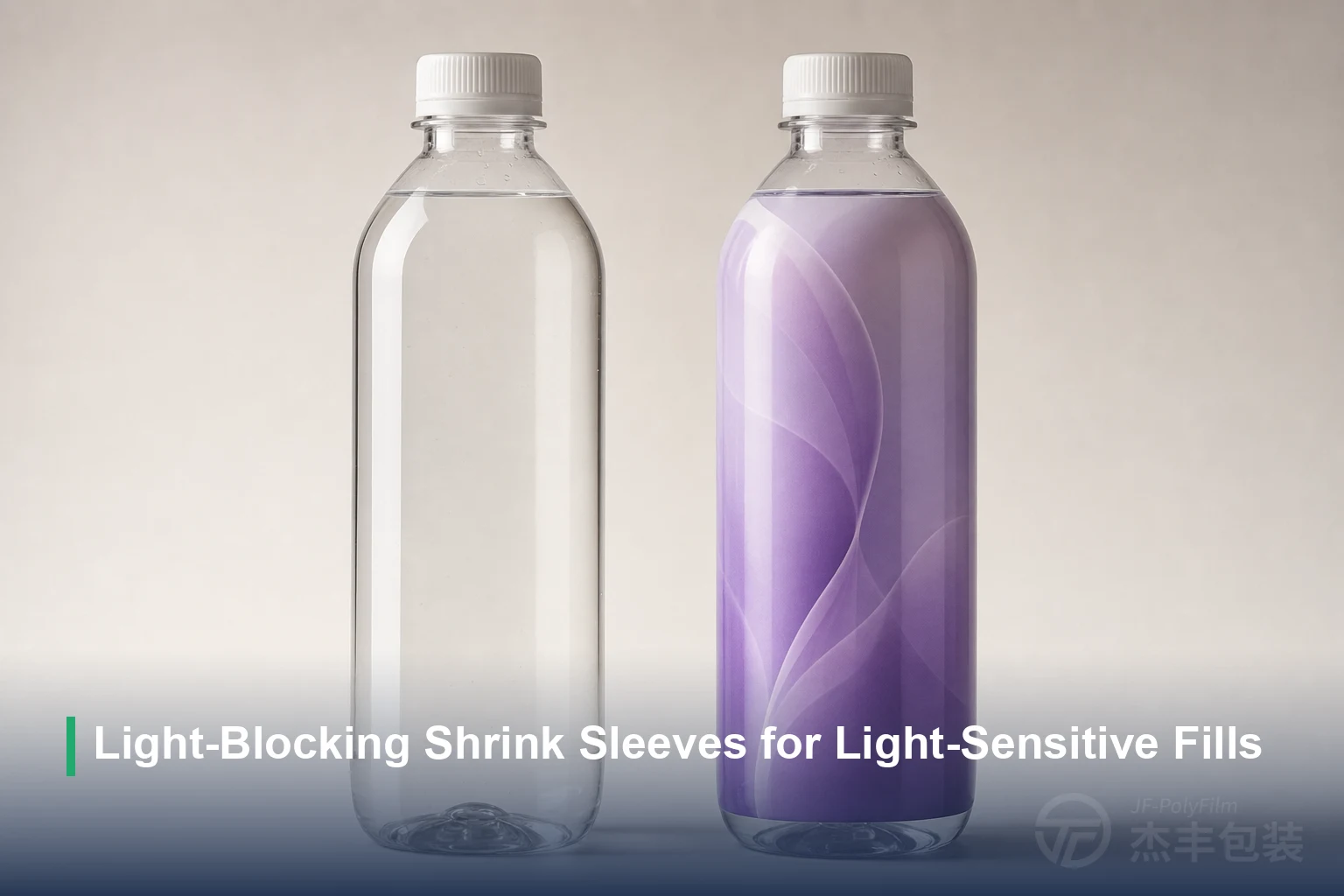
Light-Blocking Shrink Sleeves for Light-Sensitive Fills
Beer, dairy, supplements, and some medicines degrade under light. Which fills need protection, and how a full-body opaque PETG sleeve wraps the whole container to keep light off the contents.
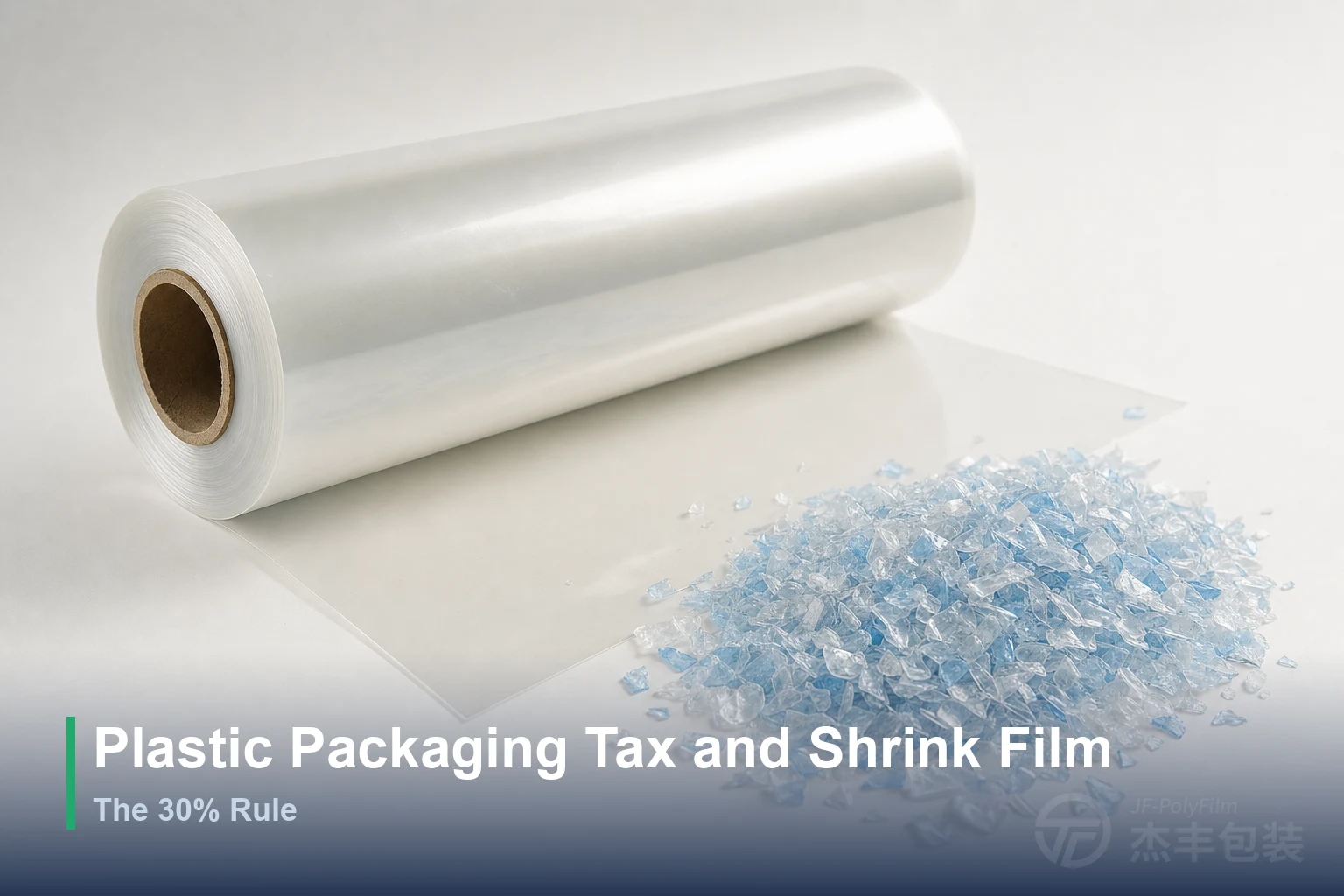
Plastic Packaging Tax and Shrink Film: The 30% Rule
How plastic packaging taxes in the UK, Spain, Italy and the EU treat shrink sleeves, why the 30% recycled-content threshold is the number worth remembering, and how RPET film helps a sleeve cross it.
Need Expert Advice on Shrink Film?
Our technical team can help you choose the right film for your application.
Contact Us